
Deep Plane vs. Traditional Facelift: What’s Actually Different—and Which Approach Is Right for You?

Facial Rejuvenation Journal · Charleston, SC
Deep Plane vs. Traditional Facelift: What’s Actually Different—and Which Approach Is Right for You?
“I want to look refreshed. I just don’t want to look different.”
It’s a sentiment we hear from patients exploring facial rejuvenation. Perhaps you’ve noticed your jawline isn’t quite as defined as it used to be. Your cheeks seem lower, or your neck has begun to change. You feel energetic, but your reflection doesn’t always match how you feel.
Then you begin researching facelift surgery and encounter unfamiliar terms: deep plane, SMAS, traditional facelift and mini facelift. Which approach is right for you? At Dr. Sonny O Plastic Surgery & MedSpa in Charleston, we believe the answer begins with understanding your anatomy—not choosing the most popular procedure.
What Really Happens as Our Faces Age?
Facial aging isn’t simply a matter of loose skin. Changes occur in the skin, facial fat, supporting ligaments, underlying tissues and bone. These changes can contribute to jowling, descending cheeks, deeper folds and reduced jawline definition. Modern facelift surgery therefore often addresses deeper structures instead of relying on tightening the skin alone.
Traditional Facelift Techniques and the SMAS Layer
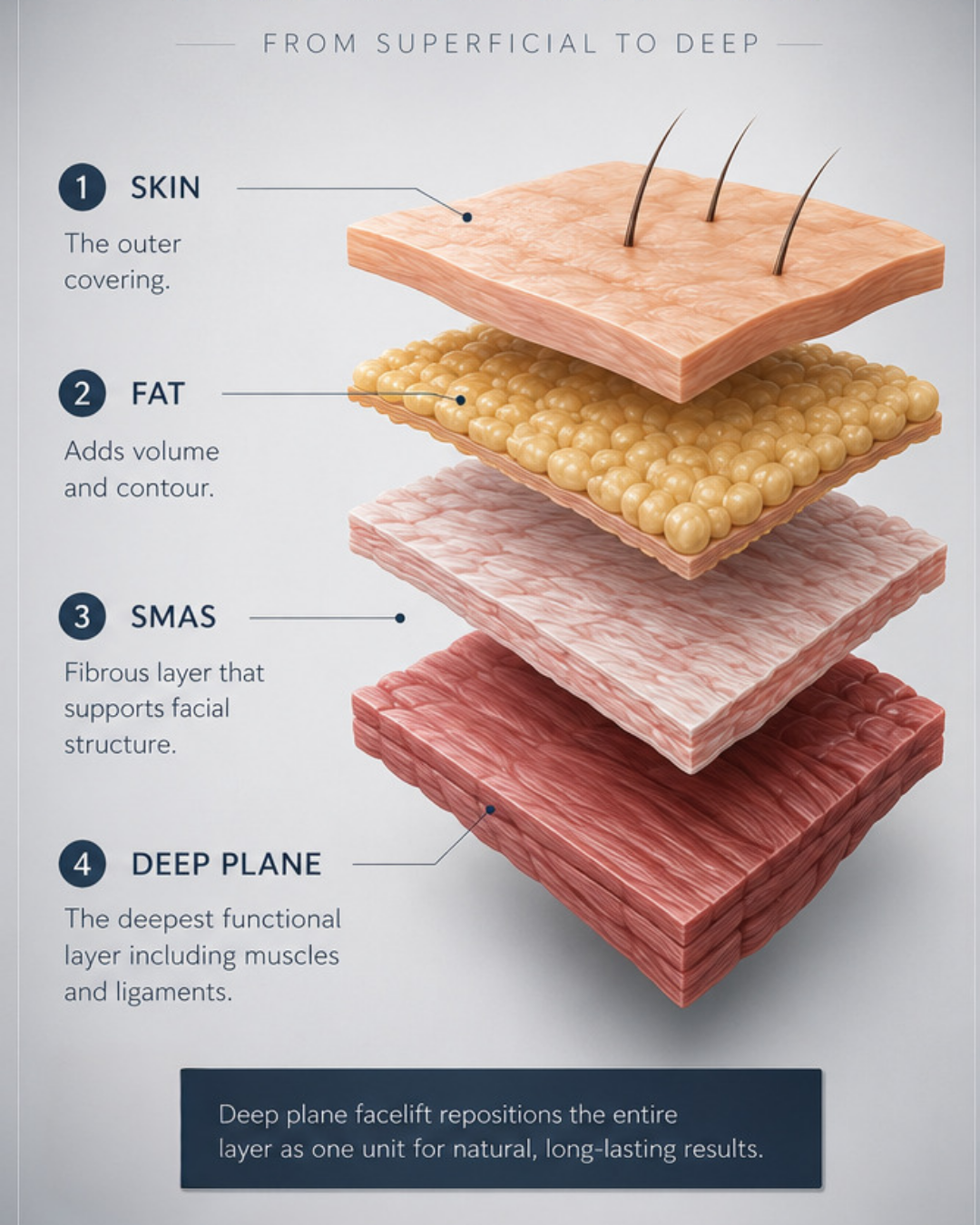
The term traditional facelift encompasses several surgical approaches rather than one standardized technique. Many contemporary facelifts address the superficial musculoaponeurotic system (SMAS), a layer of connective and muscular tissue beneath the skin. Depending on the technique, surgeons may tighten, fold, reposition or otherwise modify this layer to improve facial contours.
Deep Plane vs. Traditional Facelift: What Makes the Deep Plane Different?
A deep plane facelift involves dissection beneath the SMAS and release of selected retaining ligaments, allowing deeper facial tissues to be mobilized and repositioned. Rather than depending primarily on skin tension, the approach seeks to reposition supporting tissues and allow the skin to settle naturally over adjusted contours.
Dr. Sonny O emphasizes individualized facial rejuvenation with the goal of results that appear refreshed rather than tight or overdone. For suitable patients, deep plane surgery can address interconnected areas of facial aging, including the midface and lower face, with neck treatment incorporated when indicated.

Deep Plane vs. Traditional Facelift: Key Differences
AT A GLANCE
Deep Plane vs. Traditional Facelift Comparison
| What to compare | Traditional / SMAS approaches | Deep plane approach |
|---|---|---|
| Surgical plane | May involve SMAS tightening or repositioning | Dissection beneath the SMAS |
| Tissue repositioning | Varies by specific technique | Mobilizes deeper tissues after selected ligament release |
| Midface treatment | Depends on surgical approach | May support midface repositioning |
| Natural appearance | Goal of all well-executed approaches | Goal of deep plane surgery as well |
| Appropriate patients | Determined by personal anatomy and goals | Determined by personal anatomy and goals |
No single technique is right for every patient; an in-person evaluation determines the most appropriate plan.
Important: Deep plane surgery is not universally superior to other modern facelift techniques. Results and risks depend on patient factors, surgical planning and surgeon experience. Explore Deep Plane Facelift
YOUR NEXT STEP
Is a Facelift Right for You?
Explore your goals, concerns and readiness for a personalized consultation through our Facelift Qualification Quiz.
TAKE THE FACELIFT QUALIFICATION QUIZ →
Our quiz is an educational introduction and does not determine surgical candidacy.
Why Natural-Looking Results Matter
A thoughtfully planned facelift should complement your proportions and expressions, not erase your personality. Our goal is to restore balance and definition while preserving what makes your face recognizable.
Can a Deep Plane Facelift Be Performed Under Local Anesthesia?
Dr. Sonny O offers facelift surgery under local anesthesia for appropriately selected patients. The anesthesia plan depends on the extent of surgery, medical history, comfort and clinical assessment. Sedation or general anesthesia may be considered in some cases. Local anesthesia is not automatically the safest or best choice for everyone.
What Should You Expect During Recovery?
Recovery varies with the procedure, individual healing and any additional treatments. Swelling, bruising, tightness and temporary sensation changes can occur. Many patients need approximately two to three weeks before feeling comfortable returning to visible social activities, although healing and residual swelling can continue much longer. Your surgical team will provide individualized instructions. Risks include bleeding, infection, wound-healing problems, scarring, nerve injury and anesthesia-related complications.
How Do You Know Which Facelift Is Right for You?
You don’t need to choose a technique before meeting your surgeon. Dr. O evaluates your facial anatomy, skin quality, jawline and neck changes, medical history and goals. Some patients may benefit from comprehensive facelift and neck surgery; others may be better suited to a more limited procedure or complementary treatment.
The most important question isn’t which technique is trending. It’s which approach is appropriate for your face.
PERSONALIZED FACIAL REJUVENATION
A Consultation With Dr. Sonny O
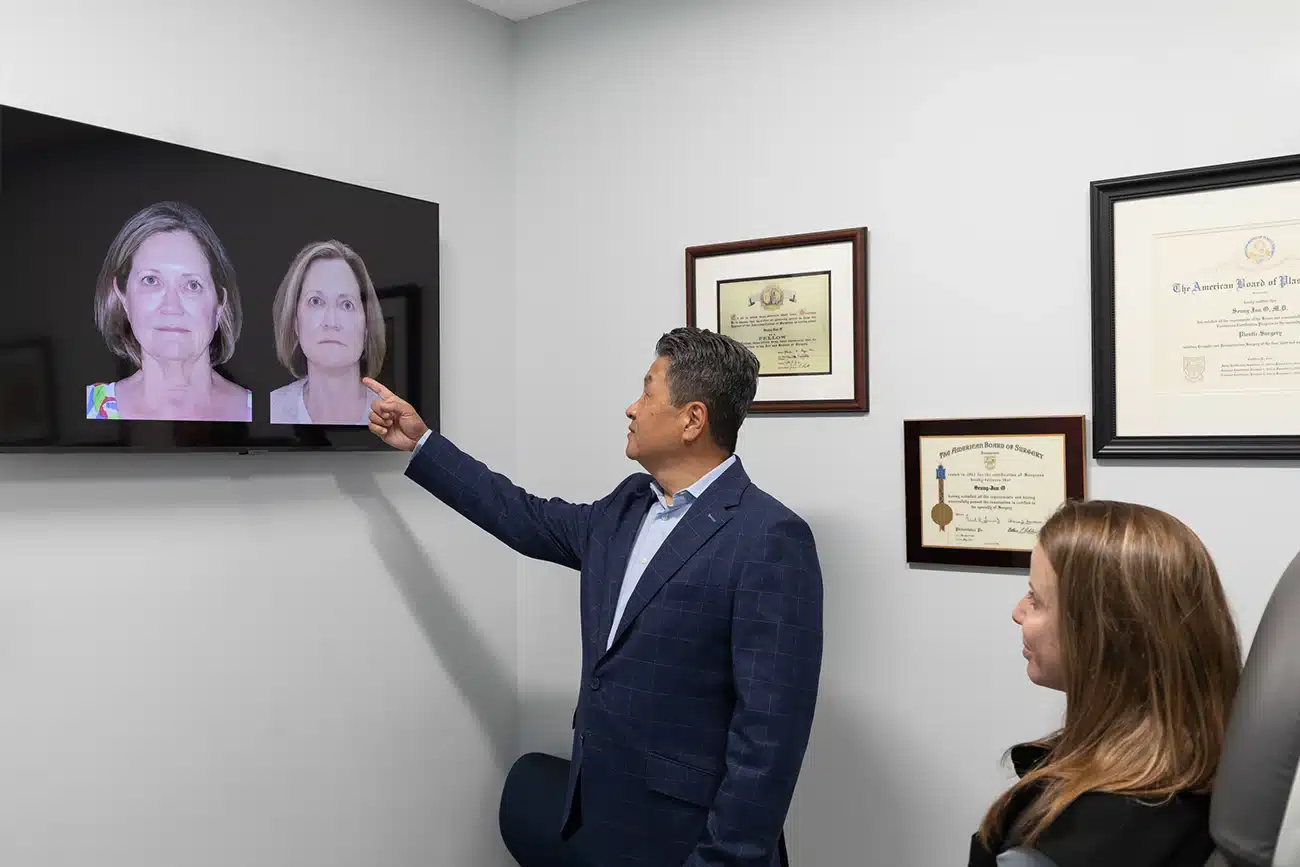
Facial anatomy is unique. At our Mount Pleasant practice serving Charleston, Dr. O discusses your goals, examines your facial features, and explains the potential benefits, limitations, and recovery considerations of different techniques.
His approach emphasizes natural-looking rejuvenation, individualized recommendations and a thoughtful discussion of local anesthesia when appropriate.
FACELIFT QUESTIONS, ANSWERED
Deep Plane vs. Traditional Facelift FAQs
Is a deep plane facelift better than a traditional facelift?
Not necessarily. Traditional facelift includes several modern approaches. A deep plane technique works beneath the SMAS and releases selected ligaments. The best choice depends on anatomy, goals and individualized surgical planning.
How long is recovery from a deep plane facelift?
Recovery varies. Many patients plan approximately two to three weeks before visible social activities, while swelling and final healing can continue longer. A personalized recovery plan will depend on the procedures performed.
Can Dr. Sonny O perform a facelift under local anesthesia?
Dr. O offers facial surgery under local anesthesia for appropriately selected patients. The most suitable anesthesia approach depends on medical history, procedure extent and comfort.
How do I compare facelift options in Charleston?
Review surgeon credentials, representative before-and-after photographs, technique explanations and risks. An individualized consultation with Dr. Sonny O in Mount Pleasant can help determine whether a facelift, neck lift or another procedure may fit your goals.
For additional education, see the American Society of Plastic Surgeons facelift guide.
PERSONALIZED NEXT STEP
Take the Facelift Qualification Quiz
Answer seven brief questions about your goals, concerns and timing. At the end, enter your name and email to request a summary of your answers and educational next steps. This quiz does not determine medical candidacy.
Prefer a separate page? Open the quiz landing page.
Take the Next Step
TAKE THE FACELIFT QUALIFICATION QUIZ →
Learn about your options before discussing candidacy with our team.
Individual results vary. All surgical procedures involve risks, and suitability is determined through an individualized medical evaluation.

